

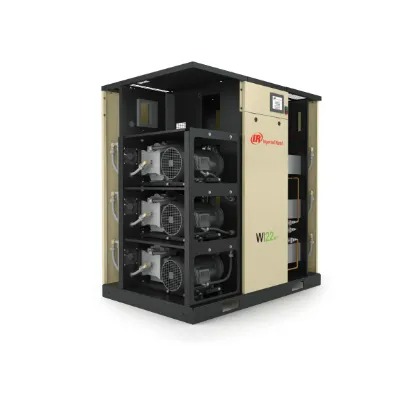
In the modern industrial landscape, the choice between different compression technologies can significantly impact operational efficiency, product quality, and long-term costs. This comprehensive guide examines the critical differences between oil-free rotary screw air compressors and their oil-lubricated counterparts, providing the technical depth needed for informed decision-making.
Understanding the Fundamental Mechanics of Compression
The rotary screw compressor is a type of gas compressor that uses a rotary-type positive-displacement mechanism. It is commonly used to replace piston compressors where large volumes of high-pressure air are needed, either for large industrial applications or to operate high-power air tools such as jackhammers. The compression process of a rotary screw is a continuous sweeping motion, which eliminates the pulsation or surging of flow found in reciprocating compressors. This allows for a more stable and predictable air supply, which is vital for automated manufacturing lines and sensitive pneumatic controls.
In a standard oil-lubricated model, oil is injected into the compression chamber. This oil serves three primary purposes: lubrication of the rotors, sealing the gaps between the rotors and the housing to prevent air leakage, and cooling the air by absorbing the heat generated during compression. Conversely, oil-free rotary screw air compressors do not introduce any lubricant into the compression chamber. Instead, they rely on high-precision timing gears to ensure the male and female rotors never touch, and specialized coatings are applied to the rotors to reduce friction and wear. This fundamental difference in design dictates everything from the quality of the discharged air to the complexity of the internal cooling systems.
Because there is no oil to absorb heat in oil-free models, they often utilize a two-stage compression process with intercoolers. This design allows the air to be compressed in two steps, cooling it down between stages to maintain efficiency and protect the hardware. Understanding these mechanical nuances is the first step in recognizing why certain industries mandate the use of oil-free technology over more traditional lubricated units, despite the higher initial capital investment often associated with the former.
The Technological Superiority of Oil-Free Rotary Screw Air Compressors
When air quality is non-negotiable, oil-free rotary screw air compressors stand as the gold standard. In industries such as pharmaceuticals, food and beverage, and electronics manufacturing, even a microscopic drop of oil carryover can lead to catastrophic product contamination, expensive recalls, and damage to brand reputation. Oil-free technology eliminates the risk of oil contamination at the source. Unlike lubricated compressors that rely on downstream filtration to "clean" the air, oil-free systems simply never introduce the oil into the airstream in the first place, ensuring 100% oil-free air as per ISO 8573-1 Class 0 standards.
The design of these machines is a marvel of precision engineering. Since the rotors do not touch, the clearances must be kept incredibly tight to maintain volumetric efficiency. These rotors are often treated with advanced materials like Teflon or specialized ceramic coatings to withstand the thermal stress of dry compression. Furthermore, the absence of oil means the system does not need to manage oil-water emulsions in the condensate, which is a significant environmental and regulatory benefit. Disposal of oil-contaminated condensate from lubricated systems requires specialized separators and adherence to strict local environmental laws, which adds to the hidden operational costs of oil-flooded units.
Beyond air purity, these compressors offer a unique advantage in extreme operating environments. Since there is no oil to thicken in cold temperatures or degrade in high heat, the performance of the air end remains relatively consistent. Modern iterations of these machines have also focused on noise reduction. While dry screw compression is inherently louder than oil-flooded compression due to the lack of a liquid dampening medium, high-quality acoustic enclosures and vibration isolation mounts have brought noise levels down to highly acceptable industrial standards, making them versatile for various plant layouts.
Oil-Lubricated Models: Practicality and Performance
Oil-lubricated or oil-flooded rotary screw compressors remain the most common choice for general industrial use. Their primary advantage lies in their robustness and lower initial cost. The oil acts as a heat sink, allowing for a single-stage compression to reach higher pressures than a single-stage dry screw. This cooling effect also means the internal components are subject to less thermal expansion and contraction, which can lead to a very long service life for the air end if the oil is maintained properly. For many metalworking shops, assembly plants, and general manufacturing facilities, the presence of minute amounts of oil is not a concern, and may even provide a slight lubricating benefit to downstream pneumatic tools.
However, the maintenance profile for oil-lubricated units is more intensive regarding consumables. You must regularly change the oil, the oil filters, and the air/oil separator elements. If the separator fails or becomes saturated, "oil carryover" occurs, where oil travels into the piping system. This can ruin paint finishes, clog delicate pneumatic valves, and necessitate expensive pipe cleaning. Additionally, as the oil ages, it can form varnish, a sticky residue that coats internal surfaces and reduces cooling efficiency. This necessitates the use of high-quality synthetic lubricants, which are an ongoing operational expense that must be factored into the total cost of ownership over the life of the machine.
In terms of energy efficiency, oil-flooded models are often very efficient at their design point because the oil effectively seals the internal leakage paths. However, the energy required to pump the oil and the pressure drop across the oil separator must be accounted for. When comparing these to oil-free rotary screw air compressors, one must look at the "Total Life Cycle Cost." While the lubricated model is cheaper on day one, the costs of filtration, oil disposal, and potential contamination risks may eventually tilt the scales in favor of oil-free technology, particularly in high-uptime environments where quality is paramount.
Comparative Analysis: Efficiency, Maintenance, and Air Quality
When evaluating oil-free rotary screw air compressors against lubricated models, three pillars must be analyzed: efficiency, maintenance, and air quality. From an efficiency standpoint, lubricated compressors generally have a slight edge in single-stage applications due to the sealing effect of the oil. However, two-stage oil-free compressors often match or exceed this efficiency by using intercooling to approach isothermal compression. The energy consumption of an air system is often 70-80% of its total cost over ten years, so even a 2% difference in efficiency can result in thousands of dollars in energy savings or losses.
Maintenance is where the two technologies diverge sharply. Oil-free units require less frequent routine maintenance because there is no oil to change, but the maintenance they do require is often more specialized. For instance, after several years of operation, the specialized coating on the rotors may wear down, requiring an air end rebuild or replacement. On the other hand, lubricated units require monthly or quarterly attention to filters and oil levels. A neglected lubricated compressor will quickly fail due to overheating or bearing damage, whereas an oil-free unit is generally protected by its timing gears but is less tolerant of dust or particulate matter in the intake air, as there is no oil to wash away contaminants.
Finally, air quality is the deciding factor for many. If your application involves breathing air, pharmaceutical production, or high-end electronics, the risk of using a lubricated compressor is simply too high. Even with the best filters, a "slug" of oil can bypass the system during a mechanical failure. With an oil-free system, that risk is zero. This peace of mind, combined with the lack of need for expensive downstream carbon filters and oil mist eliminators, often makes oil-free the most economical choice for clean industries. It simplifies the air treatment chain, reduces pressure drops across multiple filter banks, and ensures compliance with the most stringent global health and safety standards.
Strategic Solutions with Biaofang: Your Industrial Partner
At Biaofang, we understand that choosing the right compression technology is a critical business decision. With years of expertise in the compressed air industry, we specialize in providing high-performance solutions tailored to your specific needs. Our product range includes industry-leading oil-free rotary screw air compressors designed for maximum reliability and air purity. Whether you are looking for a brand-new installation or high-quality replacement parts for your existing fleet, Biaofang is committed to delivering excellence.
We take pride in our deep technical knowledge of world-renowned brands. We offer a comprehensive selection of Ingersoll Rand air compressor parts and complete machines, ensuring that your operations never face unnecessary downtime. From the robust oil-flooded rotary screw compressors to high-precision centrifugal air compressors, our inventory is curated to meet the highest industrial standards. Our team of experts is always available to conduct a system audit and recommend the most energy-efficient setup for your facility.
The Biaofang advantage lies in our global supply chain and commitment to customer service. We understand that a compressor is the heart of your factory, and any failure can halt production. That is why we stock a vast array of GHH Rand air ends and maintenance kits, allowing for rapid response and repair. Our goal is not just to sell you a machine, but to provide a long-term air solution that optimizes your energy consumption and minimizes your total cost of ownership. Trust Biaofang for all your compressed air needs, from reciprocating compressors to the most advanced oil-free systems.
Conclusion: Making the Right Choice for Your Future
Selecting between oil-free and oil-lubricated rotary screw compressors is a decision that impacts your facility for a decade or more. While oil-lubricated models offer a lower entry price and simple mechanics, the evolving demands for air purity and environmental responsibility are making oil-free technology increasingly attractive. The reduction in downstream filtration requirements, the elimination of oil-contaminated waste, and the absolute guarantee of air quality make oil-free systems a future-proof investment for any growing industrial enterprise.
Ultimately, the best choice depends on your specific application, budget, and long-term goals. If your process can tolerate a small amount of oil, a lubricated system with proper filtration might be the most cost-effective path. However, for those in the food, medical, or high-tech sectors, the shift toward oil-free is not just a preference but a necessity for compliance and quality assurance. By partnering with experts like Biaofang, you ensure that you receive the guidance and support needed to navigate these complex technical choices and implement a system that will serve your business reliably for years to come.
Ready to Optimize Your Compressed Air System?
Don't let inefficient air systems drain your profits. Contact the Biaofang team today for a professional consultation and discover how our advanced compressor solutions can improve your bottom line.
Contact Us NowFrequently Asked Questions (FAQ)
Q1: What are the main benefits of using oil-free rotary screw air compressors?
The primary benefit is the guarantee of 100% oil-free air, which is essential for sensitive industries like food processing and pharmaceuticals. Additionally, they reduce environmental impact because there is no oil-contaminated condensate to dispose of, and they often require less frequent routine maintenance related to oil changes and separator replacements.
Q2: How often do oil-free rotary screw air compressors require maintenance?
While they don't need oil changes, they still require regular checks on air filters, cooling systems, and timing gears. The air end typically needs a major overhaul or replacement every 40,000 to 60,000 hours, depending on the operating conditions and the quality of the rotor coatings. Regular monitoring of vibration and temperature is key to longevity.
Q3: Are oil-free rotary screw air compressors more expensive than lubricated ones?
Yes, the initial purchase price is generally 30-50% higher due to the precision engineering, the need for two-stage compression, and specialized rotor coatings. However, when you factor in the lower costs of air treatment, oil disposal, and the reduced risk of product contamination, the total life cycle cost is often lower in critical applications.
Q4: Can I use oil-free rotary screw air compressors in high-temperature environments?
Yes, but they require robust cooling systems. Because there is no oil to carry away the heat of compression, these units rely heavily on their intercoolers and aftercoolers. High-quality models are designed to operate in ambient temperatures up to 45°C or 50°C, provided they are placed in a well-ventilated area with clean intake air.
Q5: Is air filtration still necessary with oil-free rotary screw air compressors?
Absolutely. While you don't need filters to remove oil mist, you still need high-quality intake filters to protect the rotors from dust and particulates. Furthermore, depending on your application, you may still need desiccant or refrigerated dryers to remove moisture from the compressed air, ensuring it is dry and clean for your process.
 Copyright 2024 Biaofang Compressor Solutions. All Rights Reserved.