

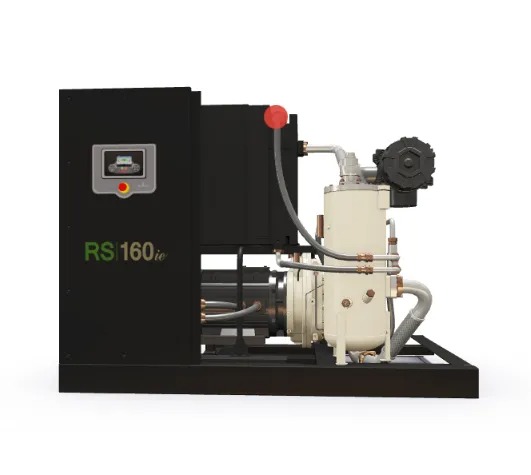
A comprehensive industrial guide to selecting the right compression technology for your facility.
Introduction
In the modern industrial landscape, the debate between choosing oil-flooded screw air compressors and oil-free alternatives is a critical consideration for facility managers and engineers. Compressed air is often referred to as the fourth utility, powering everything from heavy-duty pneumatic tools to delicate electronic assembly lines. At Biaofang, we understand that the decision impacts not only the initial capital expenditure but also the long-term operational efficiency, maintenance cycles, and environmental footprint of your production site. Selecting the "better" option is rarely a matter of universal superiority; rather, it is about aligning the specific technical capabilities of the equipment with the air quality requirements of your specific application.
Biaofang has established itself as a premier provider of high-performance compression solutions, specializing in world-class brands like Ingersoll Rand. Whether you are operating a textile mill that requires rugged reliability or a pharmaceutical lab demanding ultra-pure air, understanding the mechanical nuances of these systems is the first step toward optimization. In this guide, we will dissect the functional differences, cost implications, and performance metrics that define these two distinct technologies.
The Mechanics and Versatility of Oil-Flooded Screw Air Compressors
Oil-flooded screw air compressors operate on a relatively straightforward yet highly efficient principle. In these machines, oil is injected into the compression chamber to serve three vital functions: lubrication, sealing, and cooling. As the twin rotors spin, the oil creates a thin film between the lobes, ensuring that metal-to-metal contact is virtually eliminated. This not only extends the lifespan of the air end but also allows for higher pressure ratios in a single stage. The cooling aspect is particularly significant; the oil absorbs the heat generated during the compression process, allowing the machine to operate at lower internal temperatures compared to dry alternatives.
One of the primary reasons why many industries prefer oil-flooded screw air compressors is their exceptional durability. Because the internal components are constantly bathed in high-quality lubricants, such as Ingersoll Rand Ultra Coolant, the wear and tear on the rotors are significantly minimized. Furthermore, these units are generally more energy-efficient for standard industrial applications. The oil acts as a sealant, preventing the air from leaking back across the rotors (internal blow-by), which maximizes the volume of air delivered per kilowatt of energy consumed. For general manufacturing, automotive repair, and heavy construction, the robustness of this technology provides a reliable backbone for daily operations.
The Precision of Oil-Free Compressor Technology
While oil-flooded screw air compressors are the workhorses of general industry, oil-free compressors are the precision instruments designed for sensitive environments. In an oil-free system, no lubricant enters the compression chamber. Instead, the rotors are often coated with specialized materials like Teflon or molybdenum disulphide to reduce friction, or the system relies on high-speed centrifugal force. Because there is no oil to seal the gaps between rotors, these machines typically run at much higher speeds and often require two stages of compression to reach the same pressures that a single-stage oil-injected unit can achieve.
The fundamental value proposition of oil-free technology is the elimination of the risk of oil contamination in the air stream. In industries such as food and beverage, electronics, and medical manufacturing, even a microscopic drop of oil can lead to product spoilage, costly recalls, or damage to sensitive equipment. However, this purity comes at a price. Oil-free compressors tend to have higher upfront costs and more frequent maintenance intervals for the air end. Without the cooling properties of oil, the heat of compression is much more intense, requiring sophisticated cooling systems and high-temperature-resistant components. Biaofang provides a range of oil-free solutions for those whose process integrity depends on ISO Class 0 certified air.
Total Cost of Ownership and Maintenance Comparison
When evaluating oil-flooded screw air compressors versus oil-free models, a long-term perspective on the Total Cost of Ownership (TCO) is essential. Oil-injected models require regular changes of oil filters, air/oil separators, and the lubricant itself. While this represents a recurring cost, the components are relatively affordable and the service procedures are well-understood by most industrial technicians. Furthermore, modern filtration technology allows oil-flooded units to achieve very high air purity levels, often sufficient for all but the most sensitive applications, provided that downstream dryers and high-efficiency coalescing filters are maintained.
In contrast, oil-free machines avoid the cost of oil and separators but incur significant expenses when the air end reaches the end of its service life. Rebuilding an oil-free air end is a complex, high-precision task that often costs significantly more than the equivalent service for oil-flooded screw air compressors. Energy consumption is another factor; because oil-flooded units have better internal sealing, they are often 5% to 10% more efficient than dry screw compressors of the same size. Decision-makers must weigh the cost of high-end filtration against the higher capital and maintenance costs of oil-free systems to determine the most economically viable path for their specific facility.
Strategic Advantages of Choosing the Right System
Advantages of Oil-Flooded Systems
- Lower initial purchase price compared to oil-free equivalents.
- Superior thermal management due to oil cooling.
- Longer air end life with proper lubrication.
- Higher energy efficiency in single-stage operations.
Advantages of Oil-Free Systems
- Zero risk of oil contamination in the end product.
- Compliance with stringent international air quality standards (Class 0).
- Simplified downstream filtration requirements.
- Environmentally friendly with no oil condensate disposal issues.
Biaofang: Your Global Expert in Compression
As a professional content strategist and industry leader, Biaofang takes pride in offering a diverse portfolio of equipment tailored to your needs. We specialize in providing oil-flooded screw air compressors that feature the latest advancements from Ingersoll Rand, such as the RS series. For those requiring the highest purity, our oil-free rotary screw air compressors ensure your operations remain compliant and efficient.
Our advantage lies in our comprehensive support. Beyond the machines, we provide genuine Ingersoll Rand air compressor parts and specialized components like the GHH Rand air end to keep your systems running at peak performance. From centrifugal air compressors to reciprocating compressors, Biaofang is your one-stop shop for reliability and expertise.
Conclusion
Deciding between these technologies involves a careful balance of application requirements, budget constraints, and risk tolerance. For the majority of industrial applications, oil-flooded screw air compressors offer the most reliable and cost-effective solution, providing years of service with predictable maintenance. However, for specialized sectors where air purity is non-negotiable, the investment in oil-free technology is an essential safeguard for brand reputation and product quality.
At Biaofang, we don't just sell machines; we provide strategic air solutions. Our team of experts is ready to help you analyze your air demand and select the technology that will drive your business forward. Whether you need a robust Ingersoll Rand unit or specialized parts for your existing fleet, we are committed to excellence in every cubic foot of air compressed.
Frequently Asked Questions
Q1: What is the average lifespan of oil-flooded screw air compressors?
Most high-quality oil-flooded screw air compressors, such as those provided by Biaofang, can last between 60,000 to 100,000 hours of operation if maintained correctly with genuine parts and lubricants.
Q2: Are oil-flooded screw air compressors suitable for the food industry?
Yes, oil-flooded screw air compressors can be used in food-related applications if equipped with food-grade lubricants and high-efficiency filtration systems to meet the required safety standards, though oil-free is often preferred for direct contact.
Q3: How often should I change the oil in oil-flooded screw air compressors?
For oil-flooded screw air compressors using premium lubricants like Ultra Coolant, oil changes are typically required every 8,000 hours or once a year, depending on the environment and usage patterns.
Q4: Do oil-flooded screw air compressors produce more noise than oil-free ones?
Generally, oil-flooded screw air compressors are quieter because the oil dampens the mechanical vibrations and noise within the air end, whereas oil-free screws run at higher speeds which can generate more high-frequency sound.
Q5: Can I convert my oil-flooded screw air compressors to oil-free?
No, the mechanical designs are fundamentally different. Oil-flooded screw air compressors rely on oil for sealing and cooling, which the air end is designed for, making conversion impossible and impractical.
Ready to Optimize Your Compressed Air System?
Contact our engineering team today for a customized assessment of your facility's needs.