

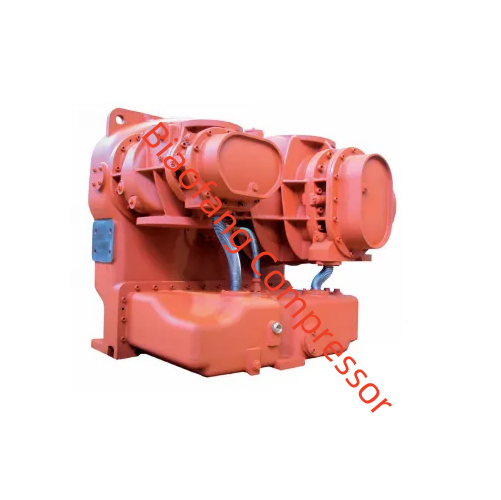
Choosing the Ingersoll Rand CD42D GHH RAND Air End comes down to matching a double-stage, gear-driven, oil-free screw compressor block to the machine it will live in. Pick the right one and you get clean, reliable air for years; pick the wrong one and you are paying for downtime, inefficiency, or a core that does not physically fit. This guide walks through the decisions that actually matter.
Over the years I have watched a lot of buyers treat an airend purchase like a commodity part — compare part numbers, pick a price, move on. The ones who get burned are usually the ones who skip the fitment and duty-cycle questions. The Ingersoll Rand CD42D GHH RAND Air End is a specific, precision-built block, and the right way to buy it is to work through a short checklist before you commit.
What the Ingersoll Rand CD42D GHH RAND Air End Is
The CD42D is a double-stage, gear-driven, oil-free screw compressor block built for general industrial applications. In plain terms, it is the rotating core that compresses air in two stages, with precision timing gears keeping the rotors synchronized and no lubricant ever entering the compression chamber. The result is oil-free compressed air from a block engineered by GHH RAND, the German airend specialist behind many Ingersoll Rand machines.
Quick take: the Ingersoll Rand CD42D GHH RAND Air End is a two-stage, oil-free screw block for clean, continuous industrial air — the key is matching it correctly to your compressor.
Four Checks Before You Choose
Every airend selection I have been part of comes down to the same four questions. Work through them in order and the choice almost makes itself:
| Check | What to Ask |
|---|---|
| Model and part number | Does the block designation and engraved number match the machine frame exactly? |
| Design family | Is it oil-free or oil-flooded? Mixing the two is a costly, unsafe mistake. |
| Duty cycle | Is the line continuous-duty or intermittent? A block must be sized to the load. |
| Air quality requirement | Does your process demand oil-free air, or will trace oil be tolerated? |
Match the Block to Your Machine, Not Just "Something Similar"
The most expensive mistake in this category is buying a core that "looks close" but does not match the frame. Airends are machined to tight clearances, and the mounting, gearing, and porting are all specific to the machine family. Before you order, photograph the machine nameplate and the part number engraved on the existing element. That single step removes most of the guesswork and guarantees the correct Ingersoll Rand CD42D GHH RAND Air End is quoted the first time.
A specific pitfall worth flagging is the oil-free versus oil-flooded mix-up. The two design families look similar from the outside but are not interchangeable — an oil-free block runs dry with timing gears and precise clearances, while an oil-flooded element depends on an oil bath for sealing and cooling. Installing the wrong family is not just a performance issue; it can damage the machine and void your warranty. When you send us your nameplate and existing part number, we always confirm the design family explicitly, so there is no ambiguity about which Ingersoll Rand CD42D GHH RAND Air End you actually need.
Where the CD42D Fits Best
Because it is oil-free, the CD42D is the kind of block that lands in applications where air purity is non-negotiable. The environments I consistently see it specified in are:
- Food and beverage lines where air touches product or packaging
- Pharmaceutical and medical-device manufacturing
- Electronics and clean-room assembly
- Textile, printing, and coating operations that need dry, clean air
The double-stage design gives it an edge on higher-pressure, continuous-duty lines, where sharing the compression work across two stages keeps discharge temperatures lower and efficiency steadier. You can browse the full oil-free range on our oil-free rotary screw compressor page to see how the CD42D fits into the wider line.
Why a Double-Stage Block Matters for Continuous Duty
In a two-stage airend, the compression work is split across two sequential stages instead of being done all at once. The first stage raises the pressure partway, an inter-stage path handles the thermal load, and the second stage finishes the job. The practical payoff is lower discharge temperature and steadier efficiency at higher pressure — exactly the conditions you find on a continuous production line that cannot afford to stop.
That is why I tend to steer buyers toward a double-stage block like the CD42D when the machine runs around the clock or holds a demanding pressure setpoint. The core runs cooler and more efficiently under sustained load, which translates directly into longer service intervals and fewer thermal-related trips. For lighter, intermittent duty, a simpler single-stage block may do the job — but for heavy continuous use, the two-stage architecture earns its keep.
New Core or Rebuild — How to Decide
When an existing block wears out, the practical question is whether to rebuild or replace. A rebuild can make sense when the housing and rotors are still sound and you only need bearings, seals, and gears. But if there is rotor wear, housing scoring, or you have already rebuilt once, a genuine replacement core is almost always the more reliable path — it arrives as a complete, factory-spec unit and restores the machine to known condition rather than patching it. For a block like the Ingersoll Rand CD42D GHH RAND Air End, a genuine replacement removes the guesswork from a part where precision is everything.
Protect Your Choice After Installation
Choosing the right block is only half the job; protecting it is the other half. Keep inlet filtration clean so abrasive particles cannot wear the rotors, maintain the cooling circuit because heat is the biggest enemy of an oil-free core, and log pressure and temperature so a slow drift shows up before it becomes a failure. The block itself carries a 1–2 year warranty, and disciplined operation is what keeps it well inside its service window.
A few daily habits make a measurable difference over the life of the Ingersoll Rand CD42D GHH RAND Air End:
- Replace inlet and separator filters on schedule, not on memory
- Keep coolers and ventilation clear so discharge temperatures stay low
- Log pressure and temperature readings so trends are visible at a glance
- Use genuine seals, gears, and filters when you service the block
And keep an eye on the early warning signs that a core is nearing the end of its life: a measurable drop in delivered pressure or flow at the same load, rising discharge temperature, unusual noise or vibration, and increased energy draw for the same output. On an oil-free block, wear cannot hide behind an oil change — it shows up in performance, which is actually a useful early-warning system if you are watching the numbers.
Why Buy the CD42D from Biaofang
The supplier matters as much as the part number when you are buying a precision compression core. Here is what we offer at Biaofang:
Genuine GHH RAND cores. We supply the Ingersoll Rand CD42D GHH RAND Air End as a proper replacement element, not a look-alike copy.
Stated warranty. The CD42D block carries a 1–2 year warranty, so you are not buying blind.
Direct factory support. You deal with the source, which means faster answers on fitment, lead time, and technical questions.
Wide air-end range. See the full lineup on our Ingersoll Rand GHH RAND category page.
Frequently Asked Questions
Is the CD42D a direct replacement for my machine?
Fitment depends on your machine frame and original part number. The Ingersoll Rand CD42D GHH RAND Air End replaces the corresponding CD42D-designated block; send us your nameplate and existing part number and we will confirm the exact match before you order.
What does "oil-free" actually mean here?
No lubricant enters the compression chamber, so the delivered air is free of oil mist and carryover from the source. Timing gears and cooling still require service, but the contamination risk is removed at the source.
Should I rebuild my old core or buy a new one?
A rebuild can make sense when the housing and rotors are sound and you only need bearings, seals, and gears. If there is rotor wear, housing scoring, or a prior rebuild, a genuine replacement core is the more reliable path.
What information should I have ready before I order?
Photograph the machine nameplate and the part number engraved on the existing element. That gives us everything needed to confirm the correct Ingersoll Rand CD42D GHH RAND Air End the first time.
What information should I have ready before I order?
Photograph the machine nameplate and the part number engraved on the existing element. That gives us everything needed to confirm the correct Ingersoll Rand CD42D GHH RAND Air End and its design family the first time.
How long will the CD42D air end last?
Service life depends on duty cycle, ambient conditions, and maintenance discipline. A well-maintained oil-free core running within its rated duty will deliver years of reliable service; the block itself carries a 1–2 year warranty.
Need Help Choosing the Right Ingersoll Rand CD42D GHH RAND Air End?
Send us your machine nameplate and current part number, and we will confirm fitment and lead time for a genuine replacement block.
Confirm My CD42D Fitment